Podcast
The Case for Life
Subscribe to
The Case for Life Podcast:
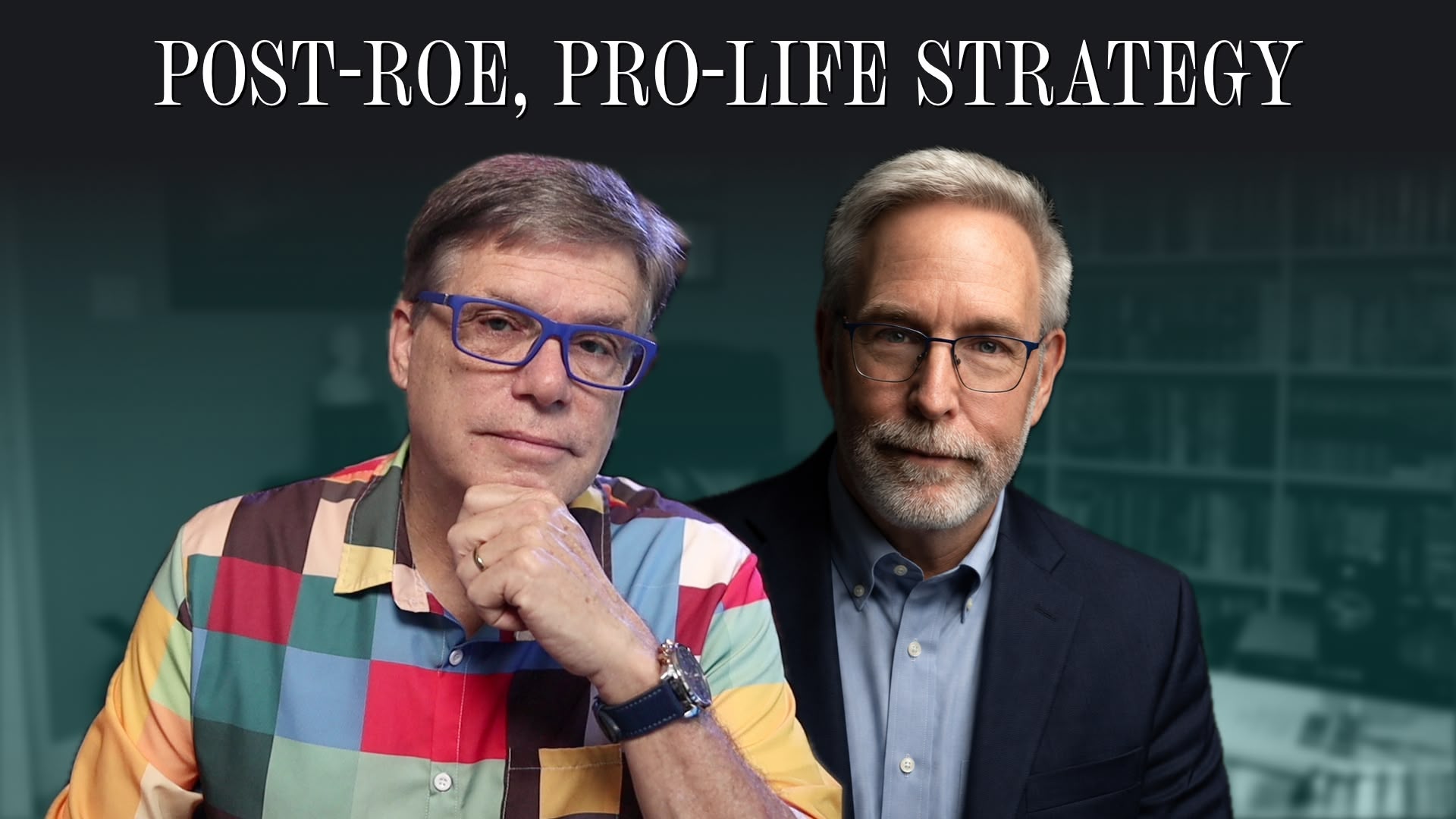
Post-Roe Pro-Life Strategy: Why the Movement Must Pivot
Scott Klusendorf sits down with Dr. Mark Newman to discuss his new book Pivot, which lays out a strategy for the pro-life movement in a post-Roe v. Wade world. They examine why abortion rights keep winning at the ballot box in deep red states, how pastors have been left unequipped by their seminaries, and why so-called equal protection bills are unenforceable — and may even cost unborn lives. Discover what it will take for the pro-life movement to work smarter and save the most lives possible on this episode of The Case for Life.

Prudence vs. Premature Zealotry: The Biblical Case for Political Wisdom
When pro-abortion advocates bristle at the label and insist they’re merely “pro-choice,” they reveal a telling instinct to apologize for something they claim is perfectly fine. Scott Klusendorf unpacks why that retreat to 1990s “safe, legal, and rare” language collapses under a single question—choice to do what?—and exposes the moral relativism quietly propping up the whole evasion. Tune in to sharpen your ability to cut through the fog and press for real clarity on this episode of the Case for Life.

Why Not Just Be Pro-Abortion?
When pro-abortion advocates bristle at the label and insist they’re merely “pro-choice,” they reveal a telling instinct to apologize for something they claim is perfectly fine. Scott Klusendorf unpacks why that retreat to 1990s “safe, legal, and rare” language collapses under a single question—choice to do what?—and exposes the moral relativism quietly propping up the whole evasion. Tune in to sharpen your ability to cut through the fog and press for real clarity on this episode of the Case for Life.

After-Birth Abortion? Answering Giubilini, Minerva, and Boonin
Scott Klusendorf wraps up his series on the academic thinkers driving pro-abortion thought. Giubilini and Minerva shocked the world by arguing that if abortion is permissible, so is killing newborns—because neither fetus nor newborn is an “actual person.” David Boonin takes a different path, conceding that you are identical to the embryo you once were, yet denying you had a right to life back then. Learn how to answer both arguments—one based on identity, the other on rights—and see why either way the conclusion is deadly, on this episode of The Case for Life.

Michael Tooley and the Pattern Behind Pro-Abortion Thought
On this episode of the Case for Life, Scott Klusendorf breaks down philosopher Michael Tooley’s mental continuity theory, which claims a right to life requires an actual (not just potential) self-aware subject with memories linking its experiences over time, meaning Tooley argues that infanticide can be justified. Scott exposes the recurring patterns beneath this and similar arguments, body-self dualism and arbitrarily chosen traits, showing why species membership and human nature, not cognitive performance, ground human equality. Once you learn to recognize these patterns, you’ll be equipped to challenge them with confidence.

Prudence and Patience In an Impatient World
The worldview premises that make abortion plausible to our fellow citizens didn’t emerge in the 1960s—they’re rooted in centuries of philosophical shifts, from the Enlightenment’s fact-value split to today’s outright rejection of human dignity. Scott Klusendorf traces this history through Nietzsche, Oxford’s Bodleian Library, and the patient legislative work of abolitionists like Wilberforce and Lincoln, showing why real cultural change takes prudence, not impatience. Discover why understanding this history matters for defending life today on this episode of The Case for Life.

Newborn, but Not a Person? Answering Peter Singer
Scott Klusendorf continues his series on answering the leading academic defenders of abortion by turning to Peter Singer, whose mental continuity view claims that no newborn, much less unborn child, is a person until it can value its own existence. Scott shows how Singer’s argument rests on a faulty utilitarian ethic and a definition of personhood that cannot account for sleeping adults, coma patients, or anyone else who clearly remains a subject of rights. Join us as we learn how to answer one of the most influential thinkers in bioethics on this episode of The Case for Life.

Human, but Not a Person? Answering Kate Greasley
Either every human being shares an equal right to life, or human value rests on traits — self-awareness, rationality, the ability to feel pain — that none of us possess in equal measure. Oxford philosopher Kate Greasley grants that the unborn are human but denies they are persons, offering one of the most sophisticated cases on the pro-choice side, and Scott Klusendorf shows why her arguments, however winsome, can’t deliver the human equality she still wants to keep. Find out how to answer one of the brightest voices on the other side without being intimidated, on this episode of The Case for Life.

When Children Become Necklaces
The culture is ratcheting up its attacks on human value and dignity. Whether abandoning reasoned debate in favor of hostile personal attacks or turning unwanted embryos into jewelry, abortion culture treats human beings as commodities to be manipulated rather than gifts to be received. Discover how you can effectively keep the main thing the main thing and defend the intrinsic value of every image-bearer on this episode of The Case for Life.